

Article
Jennifer B. Murtazashvili, Temur Umarov
Source: Getty
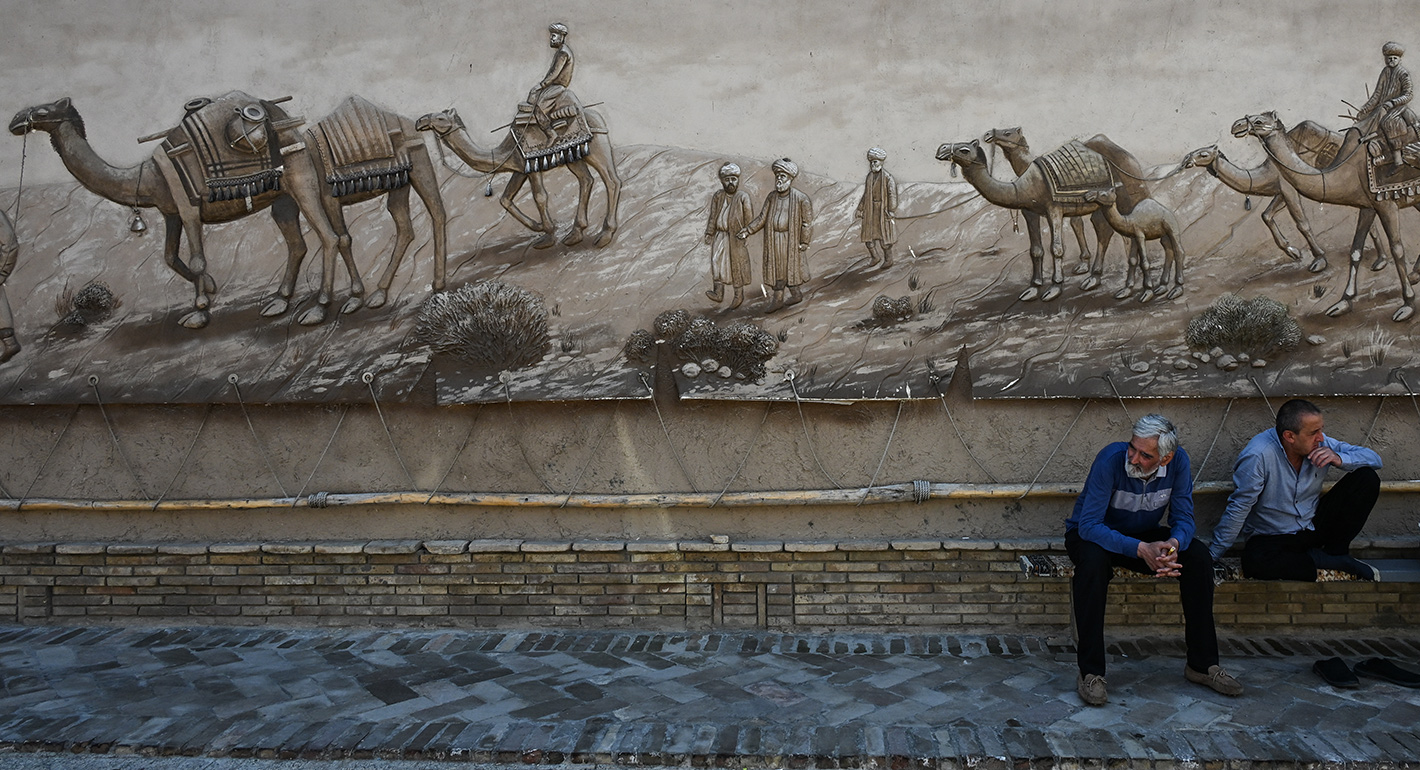
“Central Asia” as an analytical category is itself part of the problem. The term is a Soviet administrative inheritance, drawn along lines that served the convenience of Moscow. The Central Asian states the Soviets named no longer see themselves through this category alone and are not aligning across political blocs but are instead building external partnerships sector by sector, assigning different partners to different functions.
Continental Asia—the overland space from Türkiye to China—is emerging as one of the most consequential strategic arenas of the decade. Energy, trade, critical minerals, and capital are rerouting through it as the war in Ukraine is disrupting northern corridors and reconfiguring supply chains around this new geography. Yet the continent gets relatively little analytical attention compared to its maritime counterpart, the Indo-Pacific, as it is fragmented across tired geopolitical categories: Central Asia, South Asia, the Middle East, the Caucasus, and the post-Soviet space. Together, it is a single strategic field.
“Central Asia” as an analytical category is itself part of the problem. The term is a Soviet administrative inheritance, drawn along lines that served the convenience of Moscow. The Central Asian states the Soviets named no longer see themselves through this category alone. For example, Kazakhstan has built its foreign policy around the Middle Corridor that connects it to the Caucasus and Türkiye. Uzbekistan has anchored its foreign policy on Afghan and South Asian connectivity. Azerbaijan sits outside the category entirely but is functionally inseparable from it. Treating the region through its Soviet-era shell keeps administrative borders alive long after the states themselves have moved beyond them. The geography that matters is continental, not post-Soviet.
These frameworks no longer fit the contours of this region. The states in question are not aligning across political blocs, but instead building external partnerships sector by sector, assigning different partners to different functions.
In addition, the rising importance of this region is not matched by the frames we use to analyze it. For a decade, analysis of this region has been organized around a single question: With which great power will these states align? The New Great Game framing casts them as terrain contested by China, Russia, and the United States. The swing-state framing treats them as “middle powers” weighing which camp to join. Both approaches descend from an older tradition that reads smaller states almost singularly as objects of larger rivalries. Both presume that alignment, in some form, motivates current behavior.
These frameworks no longer fit the contours of this region. The states in question are not aligning across political blocs, but instead building external partnerships sector by sector, assigning different partners to different functions. The behavior is consistent enough across the region, and durable enough over time, that it warrants an analytical framework of its own.
Consider Kazakhstan. On November 6, 2025, President Kassym-Jomart Tokayev announced Kazakhstan’s accession to the Abraham Accords at a White House summit. Days later, Tokayev was in Moscow, signing a declaration elevating relations with Russia to a Comprehensive Strategic Partnership and Alliance with Vladimir Putin. Kazakhstan remains a member of the Collective Security Treaty Organization, the Eurasian Economic Union, an active participant in China’s Belt and Road Initiative, and is a party to the European Union’s critical raw materials partnership. While classic approaches to international relations may describe this as hedging behavior, the choices Kazakhstan is making are less defensive and more strategic than such framing might suggest. Tokayev is exercising agency, choosing which partners suit the country’s sectors best.
The states of Continental Asia are not picking camps. They are assembling portfolios, selecting different partners in key sectors to meet their distinct needs, all on unique terms. They can do this because they have more agency than most observers assume. What Kazakhstan and its neighbors are practicing is better described as portfolio politics: the deliberate allocation of external relationships across functional sectors, with different partners assigned to fulfill distinct roles.
The strategic field on which this plays out has widened considerably in recent years. Russia and China are important powers but operate in an increasingly crowded geoeconomic landscape. They are participants integrated into the portfolio of each country, but do not unilaterally determine its fate.
Some observers argue that multilateralism is dead, and that what is underway is a bottom-up reconfiguration of it. Some have described its replacement as plurilateralism—or bespoke coalitions of the willing forming around particular issues. Seen from inside Continental Asia, the same pattern takes a more specific form. Portfolio politics is the deliberate allocation of external relationships across functional sectors. The analogy is an investment portfolio: capital allocated across assets with different risk and return profiles, rebalanced as conditions change, with managers actively taking stock of the concentration of risk over space, time, and sector.
The concept is distinct from the adjacent vocabulary it is displacing. Hedging is uncertainty management—a state keeps options open because it cannot predict which great power will come out on top. Multivectorism, a doctrine coined in the 1990s by Nursultan Nazarbayev, the first president of Kazakhstan, was the survival strategy adopted by newly independent states that dictated a defensive posture by coexisting with powerful neighbors to prevent domination. This language was emblematic of an era when Kazakhstan and the region had few partners and less leverage. Swing-state logic treats these states as pivotal multi-aligned actors whose choices will shape great power competition and measures their importance by their capacity to tip the balance, rather than by what they are building on their own.
Facing dependence on neighbors for infrastructure, transit, political cooperation, and stability, Continental Asian states have taken that geography as a given and built a strategy around it by diversifying the partners through whom every dependency runs.
All three approaches share an underlying premise: that the behavior on display is defensive or reactive to the actions by larger powers rather than proactive, constructive, or strategic.
Portfolio politics inverts that premise. It is not a transitional posture between alignments but a new strategy to manage external relations to build a steady state. States are not avoiding choices; they are making dozens of them, sector by sector, with an eye toward managing risks and keeping potential tensions between partners on separate tracks. Versions of this dynamic are visible in the Gulf, in Southeast Asia, and in parts of Africa, but the logic is particularly acute in the Eurasian heartland. Landlocked geography is a powerful driver. Facing dependence on neighbors for infrastructure, transit, political cooperation, and stability, Continental Asian states have taken that geography as a given and built a strategy around it by diversifying the partners through whom every dependency runs.
Two events opened the door for a more entrepreneurial foreign policy across the region. The American withdrawal from Afghanistan in August 2021 was the first. Russia’s full-scale invasion of Ukraine in February 2022 was the second. Neither event created portfolio politics on its own, but together they created incentives and cleared the space for states in the region to experiment with new partners and new kinds of relationships.
Azerbaijan, Kazakhstan, and Uzbekistan are not hedging against a possible future rupture with Moscow; they are acknowledging that Russia has ceased to perform reliably in specific sectors and are diversifying to other partners.
Most analysts expected the U.S. withdrawal from Afghanistan to destabilize the region. It did the opposite. For twenty years, the U.S. military presence organized regional politics around a single question: how to help, accommodate, or resist the American project in Afghanistan. When that project ended, the bilateral ties to Washington that were structured around Afghanistan policy in the region thinned and regional states began dealing directly with one another. Continental Asian states began doing what they had long wanted to do: engage with Kabul directly, trade with one another, and treat the Taliban as a regional rather than a global problem. The insurgency that had split the region apart for decades was over. An erratic Taliban is a workable counterpart in a way that active warfare was not.
Ukraine then hastened these dynamics. The closure of northern routes through Russia and Belarus forced logistics and capital to reorganize not just temporarily, but structurally. Kazakhstan, one of the world’s largest crude oil exporters, has been rerouting growing volumes of oil through the Baku–Tbilisi–Ceyhan pipeline, while the Russia-linked Caspian Pipeline Consortium (CPC) still carries 80 percent of its crude. The point is not to exit the CPC—Kazakhstan continues to invest in it—but to build a second partner for the same job, because Russia is no longer the most reliable supplier of that particular function.
The same logic is playing out across the region. Azerbaijan, Kazakhstan, and Uzbekistan are not hedging against a possible future rupture with Moscow; they are acknowledging that Russia has ceased to perform reliably in specific sectors and are diversifying to other partners. Sanctions on Russia accelerated the process by making it costly to keep Russian providers in functions where alternatives existed.
Kazakhstan illustrates what portfolio politics looks like at its most expansive. Astana holds partners in nearly every major functional category, and the breadth itself is the strategy. The Russian-backed Collective Security Treaty Organization (CSTO) provided regime security in January 2022, when Tokayev faced the most serious domestic crisis since independence in the form of protests that began over fuel prices that spread across the country and triggered an apparent coup attempt from the domestic security services. With fear of his own forces fragmenting, Tokayev called in CSTO troops—a Russian-led force that stabilized Almaty within days.
The Eurasian Economic Union and the Caspian Pipeline Consortium keep Russian-linked hydrocarbons moving into global markets. China’s Belt and Road Initiative has underwritten east-west infrastructure across Kazakhstan. The Middle Corridor, which Kazakhstan has been building out with Azerbaijan, Georgia, and Türkiye with help from EU and Gulf financing, provides a second transit outlet that reduces dependence on Russian pipelines. On critical minerals, Kazakhstan reached outside its existing partners and turned to the United States, signing a $1.1 billion tungsten joint venture with Cove Capital and Kazakhstan’s National Mining Company in November 2025. The venture is 70 percent U.S.-owned, with up to $900 million in Export-Import Bank financing. Because China controls more than 80 percent of global supply, no other partner already in Astana’s portfolio could give Kazakhstan independent processing capacity for this metal. Washington could.
Uzbekistan runs the portfolio that most clearly reflects the challenge of geography. Doubly landlocked and dependent on neighbors for every route to global markets, Tashkent has turned that constraint into breadth, recruiting a diverse set of partners that shatters the traditional contours of the region. In the south, Uzbekistan moved decisively toward Afghanistan and Pakistan where Western governments have hesitated, promoting the design and financing of the Trans-Afghan Railway and expanding direct commercial engagement with Kabul. On reform-linked investment, Tashkent turned to the European Union, hosting the April 2025 EU–Central Asia summit in Samarkand that secured a $13 billion (€12 billion) Global Gateway package and brought European finance into sectors where Russian and Chinese money had previously dominated. On nuclear energy, Uzbekistan signed a deal with Russia, contracting Rosatom in 2024 to build the country’s first nuclear power plant. This project was expanded in September 2025 into a hybrid of large-capacity reactors and small modular reactors. On hard security, Tashkent holds to deliberate non-alignment, with no foreign bases and does not participate in military blocs, which keeps every other partnership free of the constraints a formal alliance would carry.
Azerbaijan uses its portfolio to turn geography into a position of indispensability rather than dependence. Every major east-west corridor that bypasses Russia runs through Baku. Azerbaijan has organized its external relationships to keep that hinge functional no matter the disruption. Gas exports to Europe expanded sharply in 2022, as the EU sought alternatives to Russia. This was enshrined in the July 2022 EU–Azerbaijan memorandum committing Baku to increasing gas volumes to Europe by 2027. The Port of Baku and the Baku–Tbilisi–Kars railway are the two pinch points of the Middle Corridor. Defense and intelligence ties with Israel sit alongside managed but functional relationships with Russia and Iran. This configuration would be incompatible if treated as alignments, but it functions without friction when relationships are compartmentalized. Baku can keep these contradictory relationships running because it treats each as a discrete functional channel rather than as a political bloc.
Pakistan demonstrates that portfolio politics is not only a luxury of well-resourced states. Islamabad runs a portfolio under severe constraint and uses it more actively than the resource base might suggest. The 2024 $7 billion IMF Extended Fund Facility was made possible only by simultaneous rollovers of roughly $12 billion in cash deposits from Saudi Arabia, China, and the UAE. Three bilateral creditors were stitched together to satisfy one multilateral program that none of them alone could have unlocked. The China–Pakistan Economic Corridor (CPEC) anchors Pakistan’s relationship with Beijing in concrete terms. Since 2015, CPEC has channeled roughly $62 billion in committed investments into Pakistani roads, railways, ports, and powerplants, adding nearly 8,700 megawatts of generating capacity and locking the country’s energy system into Chinese financing and operating banks. China now holds roughly $30 billion of Pakistan’s $130 billion in external debt, making it Islamabad’s largest bilateral credit line. CPEC 2.0, advanced in the past year, extends this relationship into special economic zones, agriculture, and digital infrastructure.
Most striking has been the reopening of the channel to Washington after years of drift. Pakistan’s Army Chief Asim Munir had an unprecedented White House lunch with President Trump in June 2025, followed by a framework on critical minerals, and by April 2026, a mediating role between the United States and Iran during the current war. Islamabad, tied deeply to Beijing, can simultaneously broker for Washington and Tehran shows how far portfolio politics can stretch.
Continental Asia is one of the most heavily sanctioned neighborhoods in the world. Russia sits under the most comprehensive Western sanctions regime ever imposed on a major economy. Iran has been under layered sanctions for more than four decades. Afghan central bank reserves deposited in the United States remain frozen. Belarus is sanctioned by the EU, the UK, and the United States. For a Kazakh exporter or an Uzbek bank, several immediate neighbors are jurisdictions where ordinary commercial activity carries legal risk. This is why portfolio politics is essential rather than incidental to the region. Every sanctioned channel creates a gap, and every gap creates an opening for an alternative partner, which has pushed neighbors to diversify faster and forced them to become more entrepreneurial about it than states anywhere else.
Every sanctioned channel creates a gap, and every gap creates an opening for an alternative partner.
The strategy has also proven durable under stress. If portfolio politics had a natural breaking point, it would be regime-security crises, the moment a leader has to call in one partner for emergency military help and ends up so indebted that every other relationship in the portfolio gets pulled into alignment with that partner. Kazakhstan in January 2022 was the obvious test. The CSTO intervention stabilized Almaty within days. Observers widely expected Tokayev to realign toward Moscow. He did not. Tokayev publicly refused to recognize the separatist entities in eastern Ukraine, saying so in Putin’s presence at the St. Petersburg forum in June 2022. Kazakhstan is also complying with Western sanctions on Russia. In November 2025, he joined the Abraham Accords. Calling in the CSTO set a limit on how far Tokayev would push back against Moscow. The incident did not realign him, while the rest of the portfolio kept diversifying.
When Tajik President Emomali Rahmon rebuked Vladimir Putin in Astana in October 2022 for treating Central Asia “like small nations,” he was not breaking with Moscow. He was objecting to a particular reading of the region where outsiders suggest its countries operate off the same script or that they move or should move as one, and they can be courted or commanded as a bloc. Reading the region this way is not a Russian monopoly. It is what every outside power does.
The 5+1 format Rahmon was criticizing has been adopted by China, the European Union, Gulf states, Japan, South Korea, and the United States, and each format assumes the region behaves as a single interlocutor.
Functional diversification is not a transition to something else, but instead is a durable and intentional strategy developed by countries in the region who have greater agency than at any time in recent history.
But the states in the region are not behaving that way. The empirical literature on trade partner diversification finds that economies with broader partner sets will grow faster and weather shocks better. Portfolio politics is how these states actually conduct foreign policy. Outside powers who treat the region as a bloc misread what is happening inside it.
Great Game language overstates rivalry and swing-state language overstates alignment. Both share an unstated premise that the region is a space where sides will ultimately be chosen. Portfolio politics names what is actually happening in the region where states choose, and they choose often, but by sector, not by camp. Functional diversification is not a transition to something else, but instead is a durable and intentional strategy developed by countries in the region who have greater agency than at any time in recent history.
Outside powers that adjust to portfolio politics will fare better in the region, and the region will fare better with them. Partners who arrive looking for alignment will find shrinking returns. Partners who arrive with something specific to offer in a defined sector will find willing counterparties and durable arrangements. The EU’s Global Gateway program, which built a menu of functional tracks across critical raw materials, transport, clean energy, and digital connectivity, points in this direction. The issue-by-issue engagement from China and the deal-by-deal investment from the Gulf in renewables, telecom, and minerals operate on similar logic, even when the strategic framing around them does not.
The implication for Washington is not to gravitate toward expanding the C5+1 into a larger body, or a bigger summit. The United States should stop testing these countries for alignment and start showing up as a bilaterial partner in the sectors where it has something distinctive to offer. Critical minerals, nuclear cooperation, capital markets, and the Middle Corridor are the obvious candidates.
Washington could also do more to support intra-regional cooperation among the states themselves rather than running everything through summits in Washington. The United States is not irrelevant in this region. American capital, American universities, and American technology are still the most sought-after partners in several of the sectors these states are building out. The work is to engage in those sectors on their merits rather than as instruments of a contest with Beijing and Moscow.
The states of Continental Asia are being creative and entrepreneurial. They are redefining the geography of the region in the process. They are doing this out of confidence, not fear.

Nonresident Scholar, Asia Program
Jennifer Brick Murtazashvili is a nonresident scholar in the Asia Program at the Carnegie Endowment for International Peace.
Recent Work

Jennifer B. Murtazashvili, Temur Umarov
Carnegie does not take institutional positions on public policy issues; the views represented herein are those of the author(s) and do not necessarily reflect the views of Carnegie, its staff, or its trustees.

The cost of air defense has become an unregistered tax on revenue for businesses. While military rents are consolidated in the federal budget, the costs of defense are being spread across the balance sheets of companies and regional governments.

Alexandra Prokopenko

Cities across the United States facilitate investment in American communities. Yet, because global attention remains focused on U.S. trade policy, their distinctive and bold local approaches to international trade and investment promotion are often underappreciated.


Wyatt Frank, Marissa Jordan
Previous dialogues ended in failure. This time could be different.

Scott Singer
Why the outcomes of the U.S.-China meetings may be limited.

Aaron David Miller, David Rennie
The Iran war is unique in the scope and scale of asymmetric warfare and AI-enabled conflict. These will test the limits of protecting civilians.

Steve Feldstein