

Commentary
In an interview, Abhinav Pandya discusses the multiple facets of India’s ties with the Middle East.
Armenak Tokmajyan
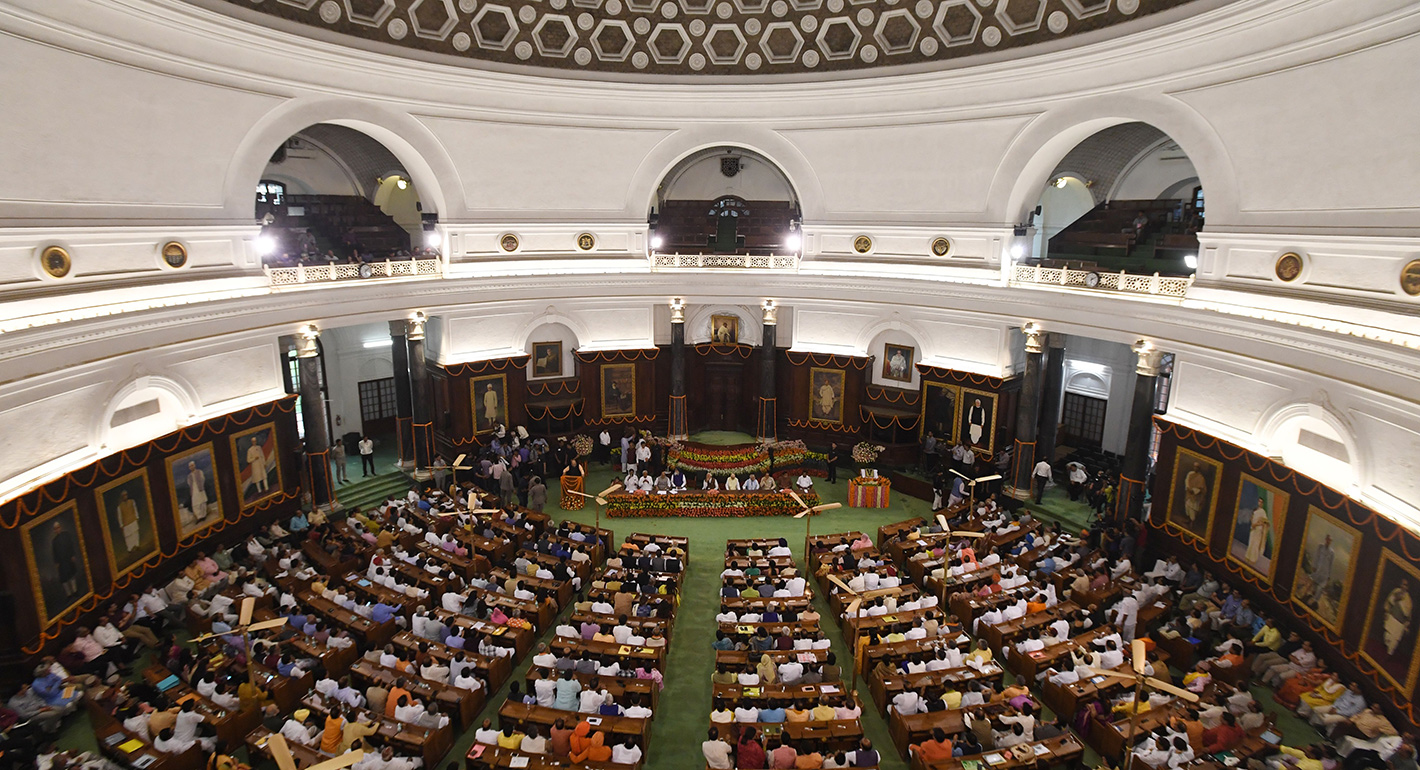
Source: Getty
The battle over representation and regional power has been delayed—not resolved—and will shape the future of India’s federal balance.
Since the most recent reapportionment of parliamentary seats between states in 1971, India’s population has surged by nearly 1 billion, yet its political map has remained unchanged. In a hastily called special session in mid-April, the government sought to finally tackle the vexing question of delimitation through a trio of bills—but their defeat in Parliament has only sharpened, rather than settled, the debate. If anything, it underscores that the question of how India will redraw its political map—and on what terms—remains unresolved and deeply contested.
At the center of this debate is the prospect of a new delimitation exercise that would trigger a reallocation of seats across states. Such a shift could significantly alter the distribution of political power: If seats were reallocated in proportion to states’ populations, under a strict “one person, one vote” standard, faster-growing, poorer northern states would likely gain representation, while slower-growing, richer southern states would see their relative influence decline. Delimitation would also entail redrawing electoral constituencies within states, an exercise that has come under heightened scrutiny following credible allegations of gerrymandering in recent cases.
The now-defeated bills offered one possible pathway forward but left key questions unanswered. In the lead-up to the special session, the government repeatedly insisted that no state’s share of seats in the Lok Sabha (the lower house of Parliament) would decline, yet the legal text contained no such guarantee. At the same time, the legislative package sought to operationalize the Constitution (One Hundred and Sixth Amendment) Act (commonly referred to as the Women’s Reservation Bill)—passed in 2023 but not yet implemented—reserving one-third of seats for women. While the Women’s Reservation Bill is politically salient in its own right, these bills sought to operationalize it for a distinctly political purpose: The quota for women functioned as a vehicle to push through a broader reengineering of India’s electoral design.
India’s constitutional design privileges national electoral majorities through the powers vested in the Lok Sabha. Yet in practice, its political system has evolved in a more federal direction—reflecting the country’s deep linguistic, regional, and social diversity. The reorganization of states along linguistic lines, the rise of regional parties, and economic liberalization have all deepened this federal character. This evolving federal balance has been central to India’s stability as a diverse yet unified polity. With the legislative pathway now uncertain, the core question is not simply what the government proposes, but what kind of federal bargain India will ultimately strike when delimitation and the balance of representation inevitably return to the political agenda.
The Indian Constitution envisaged the Lok Sabha being organized according to a population-based principle. Under Article 82 of the Constitution, Lok Sabha seats must be reapportioned across, and within, states on the basis of population after each decennial census. Accordingly, delimitation followed nationwide censuses in 1951, 1961, and 1971.
However, this pattern was suspended during the Emergency (1975–1977), the only period of India’s history in which democracy was formally suspended. In 1976, then prime minister Indira Gandhi—concerned that population-based reapportionment would penalize states with reduced fertility rates—enacted the Forty-Second Amendment. This amendment postponed the reapportionment of Lok Sabha seats until after the 2001 census. The Eighty-Fourth Amendment, passed in 2002, subsequently extended the freeze, further delaying seat allocation until the first census completed after the year 2026.
Lok Sabha members from fast-growing northern states represent more people than their southern counterparts, diluting the political voice of northern voters. But overrepresented southern states contribute a disproportionate share of India’s economic output.
One consequence of this prolonged freeze is significant malapportionment in the Lok Sabha. As India’s population has tripled and state fertility rates have diverged, some states have become increasingly overrepresented, while others have become underrepresented. Fertility rates in the southern and western parts of the country have generally been much lower than in the north and east. For example, Bihar’s population has grown by roughly 215 percent since 1971, while Kerala’s has only grown 70 percent.1 The result is that Lok Sabha members from fast-growing northern states represent more people than their southern counterparts, diluting the political voice of northern voters.
At the same time, overrepresented southern states contribute a disproportionate share of India’s economic output, financing fiscal transfers to poorer and more populous northern states. As figure 1 illustrates, the economic output of southern states like Tamil Nadu and Kerala has risen much faster than that of northern states such as Uttar Pradesh and Bihar, with the gap widening significantly over the past two decades.
This dual asymmetry—greater political representation in the south and greater fiscal redistribution to the north—has long underpinned an informal federal equilibrium. A purely population-based delimitation would nullify the southern representational advantage—upsetting a balance that has helped sustain India’s federal order for decades.
The tensions arising from these asymmetries are becoming increasingly acute. On the eve of the contentious parliamentary debate, Tamil Nadu’s chief minister termed the proposed delimitation a “massive historic injustice” and stated that the ruling BJP “was playing with fire.” Earlier, Kerala’s chief minister said that delimitation was a “sword of Damocles” hanging over the southern states. Meanwhile, northern states are growing increasingly frustrated that their democratic voice is being shortchanged. Against this backdrop, delimitation represents much more than a technical adjustment; it has become a contest over political power and the future of India’s federal order.
Compared to other federal democracies, malapportionment in India’s lower house lies toward the higher end of the spectrum (see figure 2). The standard measure of malapportionment in the political science literature, the Samuels-Snyder index, captures the share of legislative seats that are “out of place.” It is calculated by taking the absolute difference between each state’s share of seats in the legislature and its share of the overall population. These differences are then summed across all states and divided by two to avoid double-counting, as overrepresentation in one state implies underrepresentation in another.
Roughly 8 percent of Lok Sabha representation is misallocated across states and union territories—the equivalent of about forty-four of the chamber’s 543 seats. The two most underrepresented states are Uttar Pradesh and Bihar, with each state’s share of seats falling short of its share of India’s population by roughly 2 percent. The two most overrepresented states are Tamil Nadu and Kerala, whose seat shares exceed their population shares by about 2 percent and 1 percent, respectively. In practical terms, a vote in a southern state carries more weight than one in a northern state, departing from the foundational democratic principle of “one person, one vote.”
While India’s representational distortions are not extreme by international standards, their political consequences are substantial.
Unlike in some other countries where distortions are concentrated in a single region, India’s malapportionment is spread across many states. In contrast, for example, Buenos Aires alone accounts for nearly 40 percent of Argentina’s total malapportionment, with its share of the population exceeding its share of seats by 10 percent. Yet while India’s representational distortions are not extreme by international standards, their political consequences are substantial.
By contrast with the Lok Sabha, the upper house of India’s Parliament—the Rajya Sabha, or Council of States—is the least malapportioned federal upper chamber in the world (see figure 7). In practice, the relatively high level of malapportionment in the lower house has been offset by the low level of malapportionment in the proportionally organized upper chamber. This is an unusual configuration among federal democracies.
Whom does India’s malapportionment advantage, whom does it disadvantage, and to what extent? In 2001, political scientist Alistair McMillan used the Webster method—a standard technique for allocating seats in proportion to population—to estimate the number of seats that would be reallocated under strictly proportional representation, drawing on data from the 2001 census. His analysis assumed that the overall size of the Lok Sabha would remain unchanged.
McMillan’s numbers implied that, upon a reapportionment faithful to population shares, nineteen seats would shift from overrepresented states to underrepresented states—producing thirty-eight state-level seat changes in total. Table 1 updates these numbers using two different population benchmarks: the 2011 census and the government’s population projections for 2026.
Applying population figures from the 2011 census would require reallocating approximately twenty-six seats among states. In this scenario, Bihar, Uttar Pradesh, and Rajasthan—a cluster of populous north Indian states—would collectively gain nineteen seats. On the other hand, three major southern states—Kerala, Tamil Nadu, and Andhra Pradesh—would together lose fifteen seats. Eighteen states would see changes in representation, with eight states gaining or losing three or more seats.
The changes would be even more pronounced if reapportionment relied on 2026 population projections (the most recent demographic accounting available). Under this scenario, thirty-six seats would change hands among states. Together, Bihar, Uttar Pradesh, and Rajasthan would gain twenty-six seats, while Kerala, Tamil Nadu, and Andhra Pradesh would lose twenty-one seats. Only two of the twenty states constitutionally subject to population-based reapportionment (those with populations exceeding 6 million)—Assam and Maharashtra—would see their seat totals unchanged.
Such a change would have profound implications not only for the political influence of individual states, but also for the balance of power among parties and alliances. Because the Bharatiya Janata Party (BJP) and the BJP-led National Democratic Alliance are especially strong in underrepresented states, reapportionment on the basis of population would likely benefit the BJP and its current alliance partners. By contrast, the two states that stand to lose the most seats under a population-based reallocation—Tamil Nadu and Kerala—are places where the BJP has historically struggled to gain a foothold.
During a special session of Parliament abruptly convened for April 16–18, the government introduced three bills connected to the delimitation process: the Constitution (One Hundred and Thirty-First Amendment) Bill, 2026; the Delimitation Bill, 2026; and the Union Territories Laws (Amendment) Bill, 2026.
The Constitution Bill proposed changes to the Constitution, including increasing the maximum strength of the Lok Sabha from the current 550 seats to 850. Of these, the bill would have allocated a maximum of 815 to states, and thirty-five to union territories. The bill also would have removed the constitutional requirement that parliamentary and state assembly seats be reapportioned after every census, granting Parliament the authority to determine which census should be used for future delimitation exercises.
The Delimitation Bill sought to establish a framework for reallocating seats across states, redrawing constituency boundaries within states, and determining reservations for Scheduled Castes, Scheduled Tribes, and women. Under this bill, the delimitation would have implemented women’s reservation, which sets aside one-third of seats in the Lok Sabha and state assemblies for women, with reserved constituencies to be rotated after each delimitation cycle. Although the Women’s Reservation Bill was passed in 2023, it has not yet been implemented. While the exact details of the government’s proposal remain unclear, the rationale behind the proposed expansion was to enlarge the Lok Sabha by 50 percent, with all the new seats reserved for women in order to meet the one-third quota.
Currently, members of the Lok Sabha represent more people, on average, than members of any other lower house in the world.
Crucially, the Delimitation Bill specified that the allocation of legislative seats across states and the redrawing of constituency boundaries should be based on “the latest census figures,” which the bill defined as “the latest census figures published as on the date of the constitution of the Commission,” suggesting that the commission would have used the 2011 census for this delimitation.2
Nevertheless, various ministers—including the prime minister and home minister—repeatedly insisted that the bills would preserve states’ existing proportional seat shares. In particular, Home Minister Amit Shah indicated that the government was considering an expansion of the Lok Sabha by roughly 50 percent while maintaining current state-wise proportions, implying a uniform increase in seats rather than a population-based reallocation. Such an approach would allow all states to gain seats in absolute terms without altering their relative shares of representation in the lower house.
This clarification, billed as the prime minister’s guarantee, was never codified in the proposed law but was orally communicated in Parliament. Only during the waning hours of the debate did Shah quip that, if needed, he could “return in an hour with an amendment” to guarantee that no state’s share of seats would decline.
If one takes the government at its word, its plan would have expanded the size of the Lok Sabha while preserving existing state-wise proportions. Under this proposal, constituency boundaries within states would presumably have been redrawn using 2011 census data, but seats across states would have increased uniformly—sidestepping a more contentious, population-based reallocation. We approximate this proposal in figure 3 by scaling up each state’s current seat allocation by 50 percent and rounding when the scaling does not result in a whole number (which appears to be the method underlying the provisional numbers Shah floated during the special session). This results in a total house size of 824 seats.
Uttar Pradesh, which currently has eighty seats, would gain forty seats. Bihar, which currently has forty seats, would gain an additional twenty. Maharashtra would see its tally jump from forty-eight to seventy-two, while West Bengal’s would rise from forty-two to sixty-three. Because the expansion would preserve the existing proportionality, the southern states would also see large increases: Tamil Nadu would grow from thirty-nine seats to fifty-nine, Andhra Pradesh from twenty-five to thirty-eight, and Karnataka from twenty-eight to forty-two. As for the two large union territories, Delhi’s seat tally would rise from seven to eleven, and Jammu and Kashmir’s would increase from five to eight. This estimate assumes the representation in smaller states and union territories would also expand proportionally.
This proposal has both benefits and drawbacks. One of the most significant benefits is that it would sharply reduce the number of constituents represented by each member of Parliament.
Currently, members of the Lok Sabha represent more people, on average, than members of any other lower house in the world (see figure 4). The average Lok Sabha constituency represents about 2.7 million people. Expanding the chamber to 824 seats would reduce that figure to roughly 1.8 million—a decrease of about one-third. Even then, each constituency would still be more than twice as large as those in the country with the next highest ratio—the United States, where each congressional district contains about 780,000 people.
Short of maintaining the existing status quo, expanding the size of the Lok Sabha while preserving existing state-wise shares is arguably the least disruptive pathway.
One of the principal drawbacks of this proposal was that it did nothing to remedy existing representational inequities between states. While population data from the 2011 census would presumably have been used to draw constituency boundaries within states, it would not have informed the reallocation of seats across states. As a result, the proposal would effectively have entrenched the existing distribution of representation rooted in 1971 census figures.
With the government’s bills defeated, India’s existing constitutional framework remains intact, and clear constraints exist on what can happen next.
For now, the size of the Lok Sabha remains capped at 550 seats, and the long-standing freeze on reapportionment across states continues. Crucially, no fresh delimitation exercise can be undertaken until the results of the next census—currently underway—are officially published. Until then, India’s political map will remain frozen (unless, of course, the government is able to broker a compromise in the interim).
When delimitation does eventually occur, however, it will be population-based—unless the Constitution is amended. This applies to the allocation of parliamentary seats both across states and within them.
The same sequencing constraint applies to the women’s reservation. The constitutional amendment passed in 2023 explicitly ties the implementation of a one-third reservation for women to the completion of a fresh census and the subsequent delimitation exercise. As a result, women’s reservation—despite being formally enacted—cannot take effect until after the 2027 census is completed and a new delimitation is carried out.
In sum, while the opposition can claim a short-term victory in stymieing the government’s rushed legislation, the underlying issues have merely been deferred. The next census will set in motion a process that will determine how India renegotiates its federal balance in the years ahead.
At present, the tensions surrounding delimitation remain unresolved. The failed legislation, if anything, has clarified the stakes: Any future attempt to redraw India’s political map will require a broader and more durable political consensus.
The impending census and the prospect of delimitation will continue to bring these questions to the fore. Rather than deferring them indefinitely, this moment offers an opportunity to think more systematically about how India might renegotiate its federal bargain.
Looking ahead, the debate is likely to coalesce around a set of competing pathways for delimitation. At its core, the choice is between three approaches: preserving existing state-wise balances, reallocating seats in proportion to population, or adopting a compromise approach that attempts to partially accommodate the concerns of both northern and southern states. Each approach entails distinct political and institutional trade-offs.
Any future attempt to redraw India’s political map will require a broader and more durable political consensus.
The following sub-sections outline several possible pathways for reform, including reallocating seats based on 2011 census or projected 2026 population figures; expanding the Lok Sabha while preserving existing inter-state balances; adopting compromise formulas such as degressive proportionality, floor-plus-proportionality, or hybrid population metrics; and reforming the Rajya Sabha to better anchor territorial representation.
If the expansion of the Lok Sabha while retaining existing state-wise shares represents the least disruptive option, then population-based approaches lie at the opposite end of the spectrum, reallocating seats to reflect demographic realities.
The first scenario we consider adopts the government’s expansion logic but allocates seats across states on the basis of the 2011 census; the second does the same using 2026 population projections. Details for each scenario are displayed in table 2 and compared against an approximation of the government’s recent proposal, a flat 50 percent increase in the number of seats for each state and union territory. Figure 5 presents maps comparing the differences between the approximated government proposal and both of the alternative population-based scenarios.
Any plan to reallocate seats across states would involve large shifts in political power. Upon inter-state reallocation using 2011 census figures, Uttar Pradesh and Bihar alone would gain twenty-four seats in an enlarged house. Broadly speaking, the bulk of the representational gains would accrue to northern and western states, including more modest gains by Gujarat and Maharashtra.
Conversely, southern and eastern states would bear the brunt of these changes. The five major southern states (Andhra Pradesh, Karnataka, Kerala, Tamil Nadu, and Telangana) would lose a collective twenty-seven seats if reallocation took place based on 2011 census figures.
However, using 2011 census figures to reallocate seats across states would not fully restore democratic equality, since those figures are already fifteen years old—and will be even more outdated by the time of the 2029 general election. If the objective is to fully restore democratic equality across states, delimitation would have to be based on population data from the upcoming census, whose first phase commenced on April 1. Population projections for 2026 suggest an even starker redistribution of political power.
The government’s legislation fixed the maximum size of an expanded Lok Sabha at 850, with the new seats reserved for women adding to the existing allocation of 543 seats. However, a different model of expansion (which could also be adapted to implement one-third reservations for women) could follow the principle used during the delimitation exercise after the 1971 census.
In that case, the Lok Sabha could be expanded just enough to ensure that no single state lost seats, while underrepresented states gained enough additional seats to bring their representation into line with their population share. Using the Webster method and population projections for 2026, we estimate that this would require expanding the Lok Sabha to roughly 775 members (see figure 6).
Under this scenario, the number of seats per state for those states represented in proportion to their population in the Lok Sabha—namely, states with populations above 6 million—would range from four (Himachal Pradesh) to 131 (Uttar Pradesh).3 The approach is similar to a purely proportional update while avoiding seat losses for any state, producing a Lok Sabha of 775 members rather than the approximately 824 proposed by the government.
The flip side of restoring the “one person, one vote” principle is that it would not satisfy the southern states that wish to preserve their disproportionate political influence in recognition of their contribution to a federal union.
One of the advantages of this approach is political: Since no state would lose representation, this strategy would not require any legislator to support an amendment that would threaten their own seat.
In addition, by stopping short of the larger expansion envisioned by the government, this approach might also help preserve parliamentary efficacy, avoiding an overly large lower house that could complicate legislative coordination.
An obvious downside of any proportional approach—and the flip side of restoring the “one person, one vote” principle—is that it would not satisfy the concerns of southern states that wish to preserve their disproportionate political influence in recognition of their membership of, and contribution to, a federal union. In practice, an expansion of this kind would likely need to be paired with fiscal reforms to address southern states’ concerns about redistribution and relative influence.
A 2019 analysis by Milan Vaishnav and Jamie Hintson projected slightly different state-wise seat counts for two scenarios envisioned here: the reallocation of seats based on 2026 population projections, assuming the number of Lok Sabha seats remains constant at 543 (see table 1), and the restoration of representational equity through an expansion of the Lok Sabha (see figure 7).
For the former analysis, the discrepancy is primarily the result of two factors. First, the two analyses used different population projections. Vaishnav and Hintson (2019) relied on government population estimates for 2026 that derived from government projections published in 2006 and that the authors modified to incorporate data from the 2011 census. The present analysis relies on government population projections for 2026 that were published by the Government of India in 2020. Second, Vaishnav and Hintson (2019) allocated seats to Delhi, a union territory, and Jammu and Kashmir, whose status changed from state to union territory in August 2019, in proportion to their populations. The current analysis uses constitutionally prescribed seat counts for Delhi and Jammu and Kashmir.
With regard to the analysis of an expanded Lok Sabha, Vaishnav and Hintson (2019) projected that an enlarged Lok Sabha would need to have 848 seats for no state to lose seats. The present analysis pegs the number at 775 seats. The primary reason for the discrepancy between Vaishnav and Hintson’s seat numbers and those of this analysis is a difference in population projections, particularly for Kerala. Seat estimates are highly sensitive to Kerala’s projected population because, under the Webster method, Kerala is the binding case: Preventing Kerala from losing seats requires a lower common divisor, which in turn increases seat allocations for other states. Vaishnav and Hintson (2019) used a population projection for Kerala that was roughly 4 million lower than the one used in this analysis. Thus, the number of people represented per seat in Vaishnav and Hintson’s projections was roughly 1,665,000. In this analysis, that figure was roughly 1,856,500.
A further set of options would explicitly seek to make delimitation less contentious by splitting the difference between over- and underrepresented states.
One option would be to adopt a form of degressive proportionality, whereby more populous states receive more seats, but with diminishing returns (that is, not in strict linear proportion to their population). While this approach would not fully satisfy the concerns of either the northern or southern states, it would represent a more systematic compromise than the status quo. It would go further than the government’s current proposal but fall short of full proportionality.
A second option would be to implement a floor-plus-proportionality scheme, in which all states would receive a fixed baseline number of seats, with additional seats allocated in proportion to their populations. This would extend a principle already present in the current system, where several smaller states and union territories are guaranteed a minimum of one seat regardless of population. Both approaches, degressive proportionality and floor-plus-proportionality, would modestly rebalance representation without displacing population-based allocation.
A third approach would moderate the shift in representation by adjusting the population metric used for reapportionment. This could be done, for example, by pegging reapportionment to an average of several censuses or to an intermediate census—such as 2001 or 2011—rather than moving directly from 1971 population figures to those of a fresh 2026 census. This approach mirrors the direction implied by the government’s proposal, which relied on 2011 census data, but extends it to inter-state seat allocation.
Finally, the distributive consequences of delimitation could be offset by considering changes to the Rajya Sabha.
A distinctive feature of India’s political system is that seats in the Rajya Sabha are apportioned largely on the basis of population. In other federal democracies, subnational units tend to have equal representation in the upper house in order to enable the representation of states qua states, rather than as a function of their population. The Rajya Sabha’s proportional scheme benefits larger states and disadvantages smaller ones, which lack a forum for genuine territorial representation. This design is especially consequential in the context of delimitation, where proportional shifts in lower-house representation would not be offset by a territorially grounded upper chamber.
We estimate that, among federal democracies, India’s upper house is the least malapportioned of any comparable chamber (see figure 7). As a result, the Rajya Sabha reinforces majoritarian outcomes to a greater degree than comparator upper houses. This leaves India with two chambers that largely mirror the relative size of state populations, limiting institutional protection for federal balance.
Since Rajya Sabha reform would benefit less populous states, it could make a population-based delimitation exercise in the Lok Sabha much more palatable to them. A reformed Rajya Sabha that could function as a truly territorial chamber would go a long way toward serving as a federal check on the majoritarian logic of the Lok Sabha. However, it is worth noting that an expanded Lok Sabha would have serious implications for the balance between India’s two chambers, as M.R. Madhavan has pointed out. A significantly larger Lok Sabha would dramatically outweigh the Rajya Sabha in joint sittings of Parliament—where decisions are taken by a simple majority of members present—thereby reinforcing the majoritarian tilt of the system and weakening the upper house’s ability to act as a federal check.
A reformed Rajya Sabha that could function as a truly territorial chamber would go a long way toward serving as a federal check on the majoritarian logic of the Lok Sabha.
Three obstacles currently stand in the way of the Rajya Sabha acting as a strong territorial check on the Lok Sabha. First, for the “Council of States” to represent states as constituent units of the federation, its composition should reflect the equality of states rather than the relative size of their populations. Second, India’s Tenth Schedule (commonly known as the “anti-defection law”) prohibits legislators from defying the party whip or switching parties, lest they be disqualified from Parliament. In practice, this often compels individual lawmakers to act in accordance with their party rather than in the interests of their state. Third, a 2003 amendment to the Representation of the People Act dispensed with the domicile requirement for Rajya Sabha members, thereby severing the link between a legislator’s residency and the state they nominally represent. As the Punchhi Commission on Centre-State Relations commented, the lack of a domicile requirement “undermines the spirit of federalism,” since there should be a “direct link between the representative and the territory.”
Granville Austin, the preeminent historian of the Indian Constitution, observed that the “most singular aspect of the drafting of the federal provisions was the relative absence of conflict between the ‘centralizers’ and the ‘provincialists.’” This consensus reflected the framers’ shared belief that India’s Constitution needed a center robust enough to hold the country together despite its differences, while also preserving pluralism flexible enough to keep those differences from tearing it apart.
Today, India’s federal order is under severe strain. Against this backdrop, delimitation represents both risk and opportunity. Because the country has not reapportioned parliamentary seats in over fifty years, representational and fiscal inequities now place significant pressure on India’s federal architecture. The prospect of expanding the lower house without reallocating seats between states has the advantage of preserving a fragile compromise under which less populous and wealthier southern states are overrepresented in Parliament in exchange for contributing a disproportionate share of tax revenue. However, India could engage in a more complete reassessment of political representation in its lower house while strengthening the institutional architecture of federalism in other ways.
This moment offers an opportunity to reconsider the respective roles of the Lok Sabha and Rajya Sabha in maintaining federal balance. One possible path forward would rest on three linked measures. First, a shift toward a more proportional allocation of seats in the Lok Sabha—potentially through a degressively proportional formula—would begin to correct the widening divergence from the principle of “one person, one vote” without imposing an abrupt reallocation. Second, reforms to the Rajya Sabha could make it a more explicitly federal chamber, for instance by compressing inter-state disparities in representation and strengthening the link between states and voice in the upper house. Third, these institutional changes could be embedded in a broader fiscal compact that addresses concerns about redistribution, particularly among southern states. Taken together, such a package would better align representation with population in the lower house while compensating southern states through a more territorially grounded upper chamber and a recalibrated fiscal bargain.
Because the country has not reapportioned parliamentary seats in over fifty years, representational and fiscal inequities now place significant pressure on India’s federal architecture.
The linkage between delimitation and women’s reservation also has broader implications. By making the implementation of one-third reservation conditional on a fresh census and delimitation, the 2023 amendment effectively binds two distinct reforms together. This sequencing raises the stakes of delimitation, rendering it a prerequisite for a major bolstering of women’s representation.
While deferring delimitation further may seem like the path of least resistance, doing so risks exacerbating imbalances and intensifying federal tensions. Yet an alternative remains. Delimitation could instead serve as an opportunity to renegotiate a new federal bargain—one that restores equal representation while easing the mounting pressures on Indian democracy and reaffirming its federal foundations.
The authors would like to thank Anjuli Das for her thoughtful, patient editorial assistance with this essay. They are also grateful to Amanda Branom, Alana Brase, Aislinn Familetti, Helena Jordheim, Jessica Katz, Amy Mellon, and Jocelyn Soly for additional editorial and production assistance. Finally, Louise Tillin and Milan Vaishnav would like to thank the Geneva Graduate Institute’s Albert Hirschman Centre on Democracy for inviting them to speak on an October 2025 panel on delimitation, which gave rise to this essay.

Louise Tillin
Professor, King’s India Institute
Louise Tillin is professor of politics at the King’s India Institute.

Director and Senior Fellow, South Asia Program
Milan Vaishnav is a senior fellow and director of the South Asia Program and the host of the Grand Tamasha podcast at the Carnegie Endowment for International Peace. His primary research focus is the political economy of India, and he examines issues such as corruption and governance, state capacity, distributive politics, and electoral behavior. He also conducts research on the Indian diaspora.

Andy Robaina
James C. Gaither Junior Fellow, South Asia Program
Andy Robaina is a James C. Gaither Junior Fellow in the Carnegie South Asia Program.
Carnegie does not take institutional positions on public policy issues; the views represented herein are those of the author(s) and do not necessarily reflect the views of Carnegie, its staff, or its trustees.
In an interview, Abhinav Pandya discusses the multiple facets of India’s ties with the Middle East.

Armenak Tokmajyan
The Gulf Cooperation Council has shifted its energy export focus to Asia, particularly India and China. This is part of a broader shift as GCC members look to expand their geopolitical alliances away from the West.

Alexandre Kateb
Scholars from Carnegie’s global network comment on how the ongoing conflict between Israelis and Palestinians is affecting their areas of interest, and what the implications of this may be.



Maha Yahya, Rosa Balfour, Judy Dempsey, …
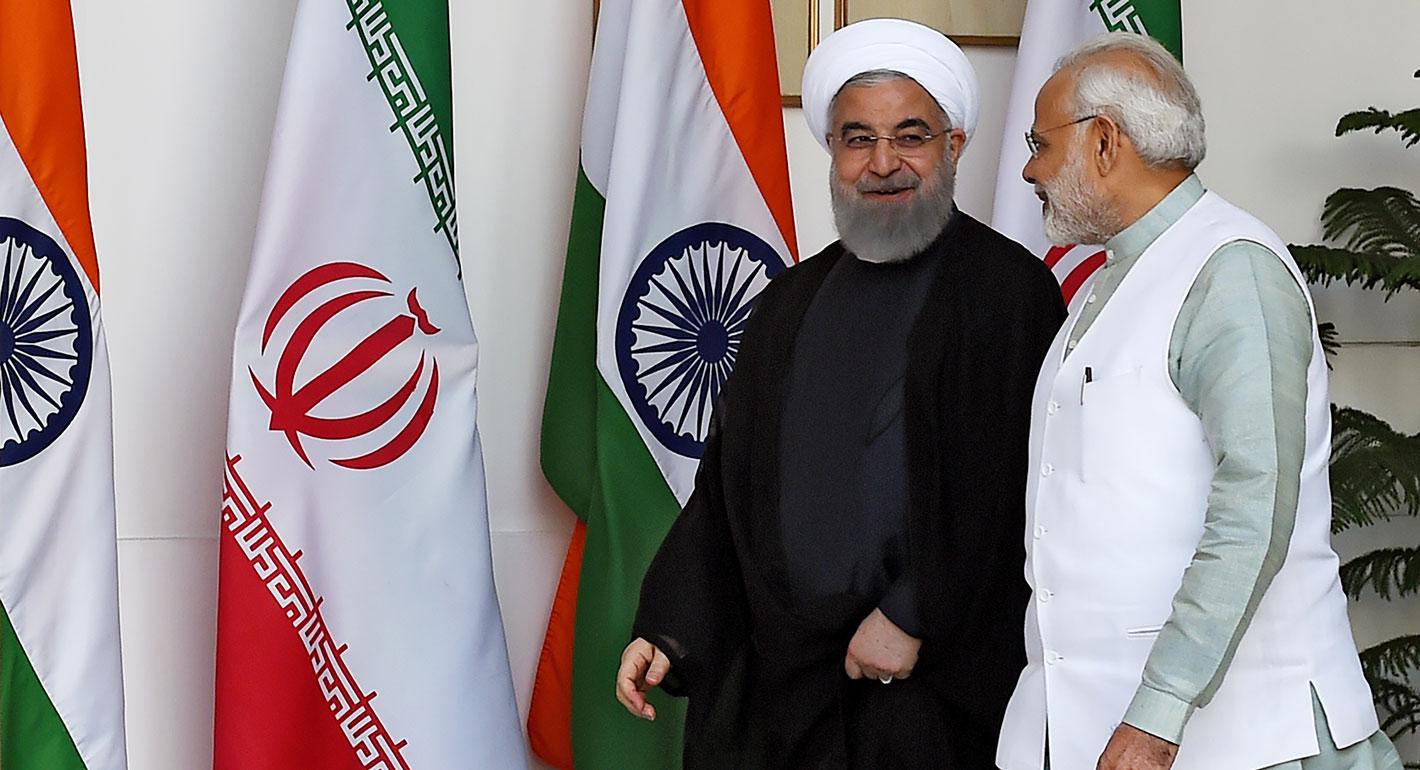
For India, the equation is pretty simple: better diplomatic relations between the United States and Iran would let New Delhi deal more smoothly with both countries. A decline in the relationship adversely affects Indian interests.

Rudra Chaudhuri
It has been a rather long learning curve for New Delhi to separate presumed transcendental religious solidarity and the logic of national self-interest in engaging the Middle East.
C. Raja Mohan